MMTLP for Dummies:
Where It All Started
Before there was MMTLP, before Meta Materials, and before the trading halt, there was an oil promotion company called Torchlight Energy Resources, Inc.
And before Torchlight ever drilled an exploratory hole in the ground, its legal foundation was an inactive public shell created for a Florida pole-dancing fitness studio called Pole Perfect Studios, Inc.
Torchlight did not complete a traditional Wall Street IPO. It bought an existing public corporate shell for $270,000 cash to immediately access a public stock ticker.
Midland geologist Greg McCabe supplied the ~172,000-acre Orogrande Basin leases, served as Chairman, owned over 7x more stock than CEO John Brda (17.09% vs 2.34%), and loaned millions to keep the company alive.
Across 10 years of public trading (2011–2020), Torchlight never generated an annual profit, burned -$111.9 million in cash, and carried $0.00 in proved commercial oil reserves on its balance sheet.
Pole Perfect
A home-based Florida fitness startup that raised $29k and gained an active SEC registration.
John Brda
Not a geologist, but a microcap corporate finance consultant and designated SEC Promoter.
Shell Strategy
Why promoters purchase dormant public shells off the shelf to bypass a $1.5M IPO.
Torchlight Birth
Texas leases paired with Brda's shell, paying $270k cash to take 58% control of the company.
Greg McCabe
Midland geologist sells ~172,000-acre Orogrande Basin, chairs the board, and loans millions.
10-Yr Reality
$13.9M lifetime revenue vs. -$111.9M deficit and exploratory test holes with zero proved reserves.
The Downfall
$25M debt wall, Nasdaq delisting notice, and 5 failed suitors forced a desperate garage sale.
SEC Filings
Interactive evidence repository of 11 verified primary regulatory filings on SEC EDGAR.
What Was Pole Perfect Studios, Inc.?
The factual corporate lineage of the public vehicle—forensically reconstructed from primary SEC EDGAR filings, state charters, and FINRA regulatory disclosures.
Retail market lore often claims that Pole Perfect Studios, Inc. was simply an innocent, failed dance studio started by a lone female fitness instructor. Primary sworn filings with the SEC reveal an entirely different corporate reality: Pole Perfect Studios was organized from day one as a classic microcap corporate vehicle structured with seasoned penny-stock financiers and licensed securities personnel.
Incorporated in Nevada on October 30, 2007, the enterprise issued 3,600,000 founder shares split equally among three individuals for an aggregate cash contribution of $29,000 ($9,667 each). On May 2, 2008, the company filed a Form S-1 Registration Statement (SEC File No. 333-150616), took the public ticker symbol $PPFT on the OTC Bulletin Board, and began maintaining clean, active quarterly reporting status.
Graduate of Rollins College (BS in Organizational Communication). Spent 11 years as a luxury residential real estate broker in Central Florida (Park Place Properties). Disclosed committing up to 15 hours per week at zero salary to Pole Perfect.
Real estate developer since 1973 and former CEO of B&B Construction. Sworn S-1 disclosures identify him as a serial microcap financier who funded Alternative Construction Company, Solar Nights Industries, and Phantom Entertainment.
Licensed Wall Street stockbroker (FINRA CRD #1961250; Series 7, 24, 55, 63). Former Director of Corporate Finance (2003–2007) at Park Financial Group—the Florida brokerage penalized by the SEC in April 2007 for aiding pump-and-dump operations.
One day after incorporation, Pole Perfect issued 154,639 shares for $3,000 in services to two corporate entities: Heartland Managed Risk, LLC (77,320 shares) and Ramsgate Group, Inc. (77,319 shares). Heartland was operated by Ronald A. Davis (ex-Goldman Sachs/Dean Witter), whose firm Genesis Corporate Development provided the Henderson, Nevada registered office and California contact number.
The legal opinion verifying the validity of the public stock offering was authored by microcap securities attorney Timothy S. Orr, Esq. (Spokane, WA). Audits of the financial statements were performed by Patrick Rodgers, CPA, PA (Altamonte Springs, FL)—a recurring auditor across regional OTC penny-stock shells.
Pole Perfect never leased a commercial building, never hired instructors, and never taught a single paying customer. By Q3 2010, its bank balance had dwindled to $973, sustained only by a $2,000 convertible note. But what it did possess was priceless to penny-stock operators: an active, debt-free, SEC-registered public corporate shell with an existing ticker ($PPFT) and pre-registered public shares. Purchasing this shell allowed Torchlight Energy to bypass an expensive, months-long Wall Street IPO and begin trading publicly in under 30 days.
When Torchlight closed the acquisition on November 23, 2010, the three founders (Skalko, Beshara, and Stone) surrendered their 3,600,000 shares for cancellation in exchange for $270,000 cash ($90,000 each). Having invested $9,667 each in 2007, they realized a 9.3x return on a company that never earned $1 in revenue.
While the 3,600,000 founder shares were cancelled, the remaining 701,730 shares (the public S-1 buyers and consulting finders) remained outstanding. Combined with 2,361,125 newly issued shares handed to Torchlight owners, the newly minted oil company entered trading with exactly 3,062,855 shares.
Who Is John Brda?
The verified corporate background, prior federal litigation, executive compensation, and regulatory charges of the microcap consultant who took Torchlight public and guided it to the MMTLP dividend.
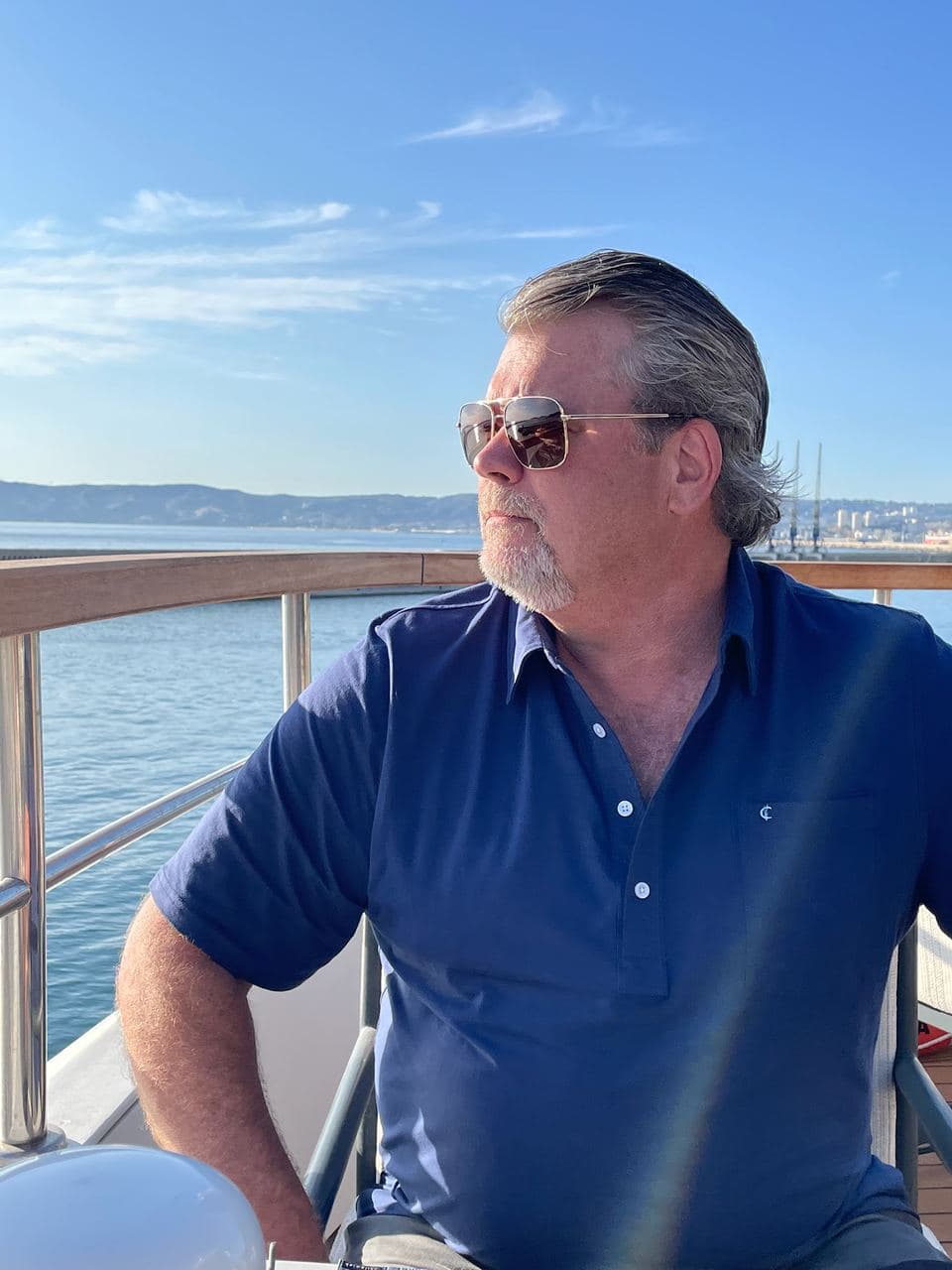
John A. Brda
Consultant • Chief Executive Officer of Torchlight Energy Resources (2014–2021)
Based in the St. Louis metropolitan area (Warson Woods & Wildwood, Missouri), John Brda was not a petroleum geologist, petroleum engineer, or wildcat driller. He was a microcap financial consultant who specialized in public shell acquisitions, corporate reverse mergers, and retail investor promotion through his boutique firm Brda & Company LLC.
After entering Torchlight through the 2010 reverse takeover of Pole Perfect Studios, Brda served as President before succeeding Tom Lapinski as Chief Executive Officer in December 2014. Throughout his seven-year tenure as CEO, Brda orchestrated repeated equity-for-debt exchanges, retail-focused promotional campaigns, and ultimately the June 2021 reverse merger with Metamaterial Inc. that created the Series A Preferred dividend structure.
In federal securities law, a “Promoter” is a formal regulatory designation under SEC Rule 405. It defines the individual who takes the initiative in founding and organizing a corporate enterprise, arranging its public financing, and marketing its stock to the public. John Brda did not drill subterranean wells; he managed corporate shell mergers, SEC compliance, debt workouts, social media public relations, and retail investor excitement.
Graduated from Southern Illinois University at Carbondale. Never licensed by FINRA/NASD as a registered broker or investment banker.
Operated his private boutique advisory practice from Warson Woods, MO, advising emerging OTC issuers on capital structure and public shells.
Held no professional geology licenses or engineering qualifications; relied exclusively on third-party operators and Chairman Greg McCabe.
Sued in Missouri state court for breach of fiduciary duty, conversion, and diversion of corporate opportunities regarding 500,000 shares of Limelight Media Group (LMG). In October 2005, the court entered judgment against Brda, finding he breached his duty of loyalty. When Brda violated an injunction and secretly sold shares to pocket $31,416.68, the trial judge held him in civil contempt of court, ordering him to disgorge proceeds to purge the contempt.
In November 2007—the exact month Pole Perfect Studios was formed—Brda was sued in federal district court (N.D. Iowa) under the federal Racketeer Influenced and Corrupt Organizations Act (RICO) and federal securities laws alongside penny-stock promoters Craig Medoff and Curt Kramer. In September 2012, a $900,000 default judgment was entered against Brda, which was later conditionally vacated after Brda entered a settlement requiring him to file a sworn explanatory affidavit.
795,625 Initial Shares Acquired
When Pole Perfect acquired Torchlight in November 2010, Brda received 795,625 shares (26% voting power). Per Form 3 footnote disclosures, Brda transferred 67,500 shares to finders, gifted 100,000 shares to his father, and retained 628,125 shares (45,625 direct + 582,500 through Brda & Company LLC).
$240k to $375k Base Salary + Options
Brda began as President in 2011 with a $240,000 base salary. Upon succeeding Tom Lapinski as CEO in December 2014, his base salary was increased by 25% to $375,000 per year, accompanied by a 3,000,000 stock option grant in June 2015.
The 2.25M Change-of-Control Options
On July 15, 2020—while Torchlight faced insolvency and a $25M debt wall—the Board granted Brda 2,250,000 stock options (375k at $0.50, 1.875M at $1.00) that only vested upon a “change of control” (merger) prior to July 15, 2021. This created an urgent personal financial incentive to execute a reverse takeover.
June 2024 SEC Fraud & Manipulation Charges
The SEC charged Brda and Meta CEO George Palikaras with federal securities fraud, alleging they orchestrated a deceptive market manipulation scheme by hyping the MMTLP preferred dividend to trigger a retail “short squeeze” while secretly dumping $137.5 million of newly issued common stock into the market via ATM facilities.
“We have two days... to take advantage of the squeeze...”
Documented in federal court filings by the SEC, this communication was sent by John Brda to George Palikaras immediately after the first day of Torchlight's June 2021 ATM offering, directing the execution of multi-million dollar equity sales while retail investors were encouraged on social media to hold and buy shares for the dividend.
Status: Cryptographically mirrored to prevent deletion or alteration

Nine days before FINRA halted trading on December 9, 2022, Brda explicitly acknowledged that MMTLP would not be able to trade after the record date, directly contradicting subsequent community narratives claiming trading should have continued through December 12/14.
Brda noted that "the spinout takes all the value away from MMTLP" and asked "who would buy?", reflecting clear understanding that an uncertificated shell placeholder after the record date had no intrinsic economic value.
While retail activists later characterized FINRA's action as an unprecedented, unpredictable intervention, Brda's tweet demonstrates that insiders and market participants were actively discussing the impossibility of post-record trading well over a week in advance.
How Did Brda Find It & What Were His Intentions?
John Brda did not discover Pole Perfect by chance. In the microcap penny-stock industry, corporate shells are traded off-the-shelf through an established network of finders, shell brokers, and securities attorneys.
Why do promoters buy dormant public shells instead of doing a standard Wall Street IPO?
How Promoters Buy Public Companies Off the Shelf
In the microcap ecosystem, an entire cottage industry of securities lawyers and shell brokers specializes in maintaining dormant public companies. When a promoter like John Brda wants to take an asset public without spending $1M+ and 18 months on an underwritten Wall Street IPO, he contacts securities attorneys and asks: “Who has a clean, SEC-reporting shell with no debt and an active ticker ready to sell right now?”
The Failed LumiGene Technologies Deal (November 1, 2010)
Regulatory records prove Pole Perfect was being actively marketed to private startups. On August 18, 2010, Pole Perfect signed a Letter of Intent with a private biotechnology startup called LumiGene Technologies, Inc. That merger fell apart, and on November 1, 2010—just 22 days before Torchlight signed—Pole Perfect filed a Form 8-K announcing the termination and stating:
Securities Counsel & 67,500 Shares Transferred
Both parties used seasoned microcap attorneys: Joseph L. Cannella at Eaton & Van Winkle LLP (New York) represented Pole Perfect, while Robert D. Axelrod at Axelrod, Smith & Kirshbaum (Houston) represented Torchlight. In John Brda's Schedule 13D filing (Item 3), Brda formally disclosed that he transferred 67,500 common shares to two finders as payment for introducing Torchlight to Pole Perfect Studios.
Pole Perfect never opened a physical fitness studio, meaning zero bank debt, zero commercial lease obligations, and zero pending lawsuits.
Tammy Skalko kept quarterly Form 10-Q and annual Form 10-K filings completely up to date with zero delinquent gaps or regulatory stop orders.
701,730 shares (547,095 public S-1 shares plus 154,639 consulting shares) remained in circulation, providing an instant public float ready for immediate secondary trading under ticker $PPFT.
Torchlight purchased and cancelled all 3,600,000 founder shares for $270,000 in cash ($90,000 each to Skalko, Beshara, and Stone)—giving the founders a 9.3x return while Torchlight secured an active public vehicle.
Pole Perfect Studios was not a coincidence. It was inventory sitting on the microcap shell market. It had just fallen out of contract with a biotechnology startup (LumiGene), finders presented it to Brda and Lapinski, Brda paid the finders 67,500 shares for making the introduction, and Torchlight paid $270,000 cash to acquire an immediate public stock ticker.
How Was Torchlight Conceived?
The chronological timeline of how private oil leases in Wilson County, Texas were paired with an inactive fitness studio shell to birth Torchlight Energy Resources, Inc.
In a standard IPO, a private operating company applies to Wall Street to go public. In a reverse merger (also called a reverse takeover), the process is flipped backwards: the private owners buy a publicly registered corporate shell that has no active business, roll their private assets into it, change its legal name, and walk away controlling a publicly listed company on day one.
Thomas Lapinski & John Brda Form Private Torchlight Energy
Thomas Lapinski, an oil exploration manager with operational experience in Texas, held exploratory drilling leases in Marcelina Creek (Wilson County, Texas) but needed capital. Lapinski partnered with John Brda to take the asset public. On June 25, 2010, they incorporated private Torchlight Energy, Inc. in Nevada.
On August 9, 2010, they submitted an SEC Form D filing disclosing a private placement of securities. Thomas Lapinski was listed as Chief Executive Officer, and John Brda was officially declared as the Promoter—the individual responsible for organizing and structuring the business vehicle.
The Reverse Merger into Pole Perfect Studios
On November 23, 2010, Lapinski, Brda, and the owners of Pole Perfect Studios executed a formal Share Exchange Agreement:
The Official Rebranding to Torchlight Energy Resources, Inc.
On January 13, 2011, Lapinski and Brda executed a written corporate consent amending the Nevada Articles of Incorporation, officially changing the company's legal name from Pole Perfect Studios, Inc. to Torchlight Energy Resources, Inc.
That same month, Torchlight entered into an executive employment agreement with John Brda, appointing him President and Secretary with an initial base salary of $240,000 per year plus equity incentives.
John Brda Becomes CEO of Torchlight
In December 2014, Thomas Lapinski resigned, and John Brda took over as Chief Executive Officer of Torchlight Energy Resources. Over the next six years, Brda managed Torchlight's public offerings, debt financing, and exploratory lease acquisitions in West Texas—operating with only four full-time employees while maintaining a public listing on Nasdaq.
By late 2020, facing substantial operating debt, exploratory drilling commitments, and impending Nasdaq delisting notices, Torchlight reached a crossroads—setting the stage for the dramatic corporate transaction that would alter the company's trajectory forever.
Who Is Greg McCabe?
The Midland oilman who provided the ~172,000-acre Orogrande Basin, served as Chairman of the Board, and owned over seven times more common stock than CEO John Brda.

Gregory McCabe
Petroleum Geologist • Chairman & CEO of Next Bridge Hydrocarbons • Chairman of Torchlight (2016–2021)
Based in Midland, Texas, Gregory McCabe holds a B.S. in Geology from the University of Texas at Arlington (1983) and brings over 42 years of independent oil and gas operating experience across the Permian Basin (McCabe Petroleum Corporation, founded 1989). Unlike John Brda—a microcap financial consultant from Missouri—McCabe was an authentic West Texas petroleum geologist who owned the mineral rights, held the drilling leases, and controlled the land Torchlight promoted. On September 25, 2026, McCabe broke a 3.5-year public silence on "Going Rogue with Lara Logan" (Ep 99.2), framing himself as a seasoned oilfield negotiator confronting regulatory failure.
McCabe was the indispensable institutional backbone and primary lender to Torchlight. While CEO John Brda focused on public shell transactions, press releases, and social media marketing, McCabe owned the underlying mineral assets, advanced millions in senior debt whenever corporate treasury reserves dried up, and held triple-lock contractual protections guaranteeing his capital recovery regardless of public stock performance.
CEO John Brda was the public face of Torchlight on retail podcasts and investor calls. But Greg McCabe was the institutional backbone. McCabe owned the land leases Torchlight promoted, chaired the Board of Directors, owned over seven times more equity than Brda (17.09% vs. 2.34%), and acted as the company's lender of last resort—loaning millions in debt whenever Torchlight ran out of cash to drill.
McCabe admitted he stayed publicly silent for 3.5 years to let the regulatory and judicial process play out: “I've been very cautious not to speak out until I let the process play out. The process has officially played out. It's taken three and a half years... right now it's time for our story to be told.”
McCabe verified his boardroom separation from CEO Brda on camera: “John Brda was the CEO of the company that ran Torchlight and I was the Chairman.” Brda handled the promotional retail facing, while McCabe controlled the land and the board.
McCabe admitted Next Bridge's May 28, 2024 S-1 offering 40M shares to short sellers through Roth Capital yielded zero participation: “How's it going? Terrible. Not one single person has reached out to settle their bets... not one single inquiry.”
Guaranteed royalty cut of every barrel produced before Torchlight pays operating expenses.
Contractual right to take 10% of operating profits once initial drilling capital is recovered.
If Torchlight fails to drill or lets leases expire, full ownership title automatically reverts to McCabe.
The Five Pillars of McCabe's Dominance & Legal Admissions
Selling Torchlight Its Crown Jewel (172,000 Acres)
Torchlight did not discover the Orogrande Basin; Greg McCabe brought it to them. On August 7, 2014, Torchlight bought 100% of the capital stock of McCabe's company, Hudspeth Oil Corporation. This gave Torchlight its flagship ~172,000 gross acres in Hudspeth County, Texas—the central asset John Brda hyped to public market investors for the next 7 years.
McCabe brought the actual oil property to the table. Before him, Torchlight was an obscure penny-stock shell with small, money-losing wells in Oklahoma and Kansas.
The Overriding Royalty, Back-In & Reversion Safety Net
McCabe structured bulletproof downside protection: (1) A 4.5% Overriding Royalty Interest (ORRI) taking a cut off the top of all oil production, (2) A 10% back-in working interest after project payout, and (3) Strict reversionary rights ensuring that if Torchlight failed to meet continuous drilling deadlines, the acreage reverted back to McCabe. When Torchlight missed the March 31, 2015 drilling deadline, McCabe extracted 631,250 stock options at $0.36 just to grant an extension.
McCabe structured the contract so he couldn't lose. If Torchlight struck oil, he got paid off the top before Torchlight covered expenses. If Torchlight ran out of money and failed to drill, he took the land right back.
Chairman of the Board & 17.09% Controlling Stake
In July 2016, McCabe joined Torchlight's Board of Directors, and in October 2016, became Chairman of the Board. By October 2020, McCabe beneficially owned 17,648,390 shares (17.09% of the company) directly and through McCabe Petroleum and G-Mc Exploration—including 4,000,000 shares issuable upon conversion of a 6% convertible note, completely dominating CEO John Brda's 2.34% stake.
John Brda was the public spokesperson and CEO on podcasts and Twitter, but Greg McCabe held the ultimate boardroom gavel and owned over seven times more equity than Brda.
Senior Secured Lender to Next Bridge Chairman & CEO
Because Torchlight burned cash every year and never produced positive operational cash flow, it relied on McCabe to stay solvent. When Torchlight sold $6M in Series C debt in October 2018, $3M was immediately paid to McCabe's MPC to repay loans. When assets spun into Next Bridge Hydrocarbons in 2022, McCabe assumed command as Chairman & CEO, holding 70,105,502 shares (26.49% control) as of March 2026. On May 28, 2024, McCabe filed an SEC S-1 offering 40M newly issued shares through Roth Capital to settle short positions, later admitting on camera: 'Not one single person has reached out to settle their bets.'
McCabe was Torchlight's private bank. In the end, he became Chairman and CEO of Next Bridge Hydrocarbons, controlling more than a quarter of all company shares while taking $0 in salary, and directly orchestrating capital strategies to resolve short positions.
Note 1 Sworn Admission: Shareholders Caused MMTLP Trading
In Note 1 (Nature of Business) of Next Bridge Hydrocarbons’ audited Consolidated Financial Statements, management and auditors put into the official SEC record: "Certain holders of the shares of the Series A Preferred Stock of Meta caused such shares to trade on the over-the-counter market (OTC) under the symbol MMTLP." This sworn admission directly refutes the popular internet conspiracy that FINRA or market makers illegally created the trading symbol without shareholder involvement.
Next Bridge admitted under federal securities laws that shareholders themselves caused MMTLP to begin trading OTC. It was not a rogue fabrication by Wall Street market makers.
The Partnership Dynamic: The Promoter vs. The Asset Holder
Torchlight was not run by John Brda alone. It was a symbiotic partnership between an OTC stock promoter and a Midland oilman.
| Aspect | John A. Brda (The Promoter) | Greg McCabe (The Asset Owner) |
|---|---|---|
| Background & Credentials | Microcap financial consultant (B.S. Finance, SIU 1988) from Missouri specializing in reverse takeovers and promotional capital raises. Never held a FINRA securities license. | Professional petroleum geologist (B.S. Geology, UT Arlington 1983) and independent operator with 42+ years in Midland, Texas drilling and managing Permian Basin acreage. |
| Corporate Title | President & CEO of Torchlight Energy (2014–2021). Stepped down upon Meta Materials merger; zero executive roles in Next Bridge Hydrocarbons. | Chairman of Torchlight (2016–2021). Current Chairman of the Board AND Chief Executive Officer of Next Bridge Hydrocarbons, Inc. (2022–present). |
| Equity Ownership (2020) | 2,318,322 common shares (2.34% voting stake). | 17,648,390 common shares (17.09% voting stake) — over 7x larger equity control. |
| Next Bridge Ownership (2026) | Zero disclosed directorships or executive officer equity control tables. | 70,105,502 common shares (26.49% voting control) as disclosed in SEC Form 10-K filed April 9, 2026. |
| SEC Fraud Indictment & Banker Valuations | Charged with federal securities fraud and market manipulation (SEC v. Brda & Palikaras, Case 1:24-cv-04806) for hyping Orogrande values ($1–$20) while third-party investment banker valuations showed estimated asset values of less than $1.00 ($0.034 to $0.83/share). | NOT charged in the SDNY complaint. Retained land rights, ORRI cuts, and promissory note claims while keeping his name off the promotional social media squeeze campaigns. |
| Promotional Strategy & The 3.5-Year Silence | Spearheaded viral retail squeeze campaigns on Twitter/X, YouTube podcasts, and private influencer text threads ("We have two days... to take advantage of the squeeze"), leading directly to federal securities fraud charges. | Maintained deliberate 3.5-year public radio silence from Dec 2022 to Sept 2026. On Sept 25, 2026 (Going Rogue with Lara Logan, Ep 99.2), McCabe broke his silence, admitting: "I've been very cautious not to speak out until I let the process play out. The process has officially played out. It's taken three and a half years... right now it's time for our story to be told." |
| Short Settlement Offering (May 28, 2024) | Zero corporate authority; faced SEC civil penalties and officer-and-director bars in SDNY federal court. | As Next Bridge CEO, filed an SEC S-1 offering 40M newly issued shares through placement agent Roth Capital to let shorts close positions; admitted on camera that zero short sellers or brokers made an inquiry. |
| Recent Litigation & Anti-SLAPP Sanctions (Fall 2026) | Active defendant in SDNY federal court facing SEC civil penalties, disgorgement, and a lifetime officer-and-director bar. | On Sept 24, 2026, Next Bridge’s defamation lawsuit against critic Jeffrey Davies (Cause No. 2026-18186) was dismissed with prejudice in Harris County, TX under the Texas Anti-SLAPP Act (TCPA), hitting Next Bridge with mandatory fees and sanctions. On Oct 13, 2026, Judge Gary Spraker in Nevada Bankruptcy Court denied McCabe’s BaileyBridge, Inc. claim buyout. |
| Downside Protection & Cash Flow | Executive salary ($240k–$375k), bonus incentives, and change-of-control stock options. | 4.5% ORRI royalty off the top, 10% back-in interest, reversionary lease repossession, promissory notes repaid from public offerings, and $0 Next Bridge salary. |
While John Brda spearheaded viral retail campaigns across Twitter, YouTube podcasts, and private text threads orchestrating the short squeeze (“We have two days... to take advantage of the squeeze”), McCabe maintained strict radio silence and made zero public meme-stock representations. On September 25, 2026 (Going Rogue with Lara Logan), McCabe confirmed on camera that this 3.5-year silence was deliberate: “I've been very cautious not to speak out until I let the process play out.”
The central predicate of the SEC's June 2024 fraud lawsuit was secretly unloading $137.5M into the inflated retail volume via the At-The-Market facility. Brda and Palikaras executed this dilution scheme; McCabe did not operate the ATM facility and did not dump his personal equity into the retail spike.
When Meta Materials spun the oil assets into Next Bridge Hydrocarbons in 2022, John Brda was completely excluded from any corporate or board role. Greg McCabe took total command as Chairman of the Board & CEO, controlling 70,105,502 shares (26.49% voting power) per the 2026 Form 10-K.
Without John Brda, Torchlight had no public ticker or stock promotion machine. Without Greg McCabe, Torchlight had no oil acreage, no board leadership, and no private credit line. By 2020, as debts crested $25M, McCabe and Brda were inseparable—and both were hunting for an exit to salvage their investment.
The 10-Year Operating Reality (2011–2020)
Did Torchlight ever turn an annual profit? Did they ever drill any oil wells? Here is the unvarnished corporate record documented directly in Torchlight's audited SEC Form 10-K filings.
Sales: Yes • Profit: Never
Gross Sales: Torchlight generated roughly $13.9 million in cumulative oil and gas revenue across its entire 10-year public life (2011–2020), peaking in 2014 from Oklahoma wells.
Net Profit / Free Cash Flow: Never. Torchlight never turned an annual operating profit in its history. It lost money every single year, culminating in a lifetime deficit of -$111,935,597 (-$111.9 million) by December 31, 2020.
Drilled: Yes • Commercial Reserves: Zero
Exploratory Holes: Torchlight participated in drilling dozens of test holes across Texas and Oklahoma.
The Geological Reality: The vast majority were exploratory test holes drilled strictly to satisfy continuous development deadlines so the leases wouldn't automatically forfeit, or non-operated minority interests later written down to zero.
In petroleum engineering and SEC accounting, “PV-10” is the standardized present value of estimated future oil revenues, minus all production and development costs. When an oil company reports $0.00 in PV-10 reserves on its audited 10-K balance sheet, it means independent petroleum reserve engineers could not verify that any of the company's acreage could produce oil profitably at prevailing market prices.
The Audited 10-Year Financial Track Record (2011–2020)
Every figure below is transcribed verbatim from Torchlight Energy Resources, Inc.'s audited Consolidated Statements of Operations filed on SEC Form 10-K:
| Fiscal Year | Oil & Gas Sales | Operating Loss | Net Loss | Accumulated Deficit |
|---|---|---|---|---|
| 2011 | $130,422 | -$1,885,027 | -$2,829,885 | -$3,710,756 |
| 2012 | $1,385,821 | -$6,610,642 | -$8,740,798 | -$12,451,554 |
| 2013 | $2,367,078 | -$10,210,049 | -$12,842,525 | -$25,294,079 |
| 2014 | $5,455,555 | -$14,942,674 | -$17,126,504 | -$42,420,583 |
| 2015 | $1,291,018 | -$37,219,308 | -$37,256,128 | -$74,903,439 |
| 2016 | $486,962 | -$7,609,480 | -$7,684,346 | -$82,587,785 |
| 2017 | $570,499 | -$3,753,126 | -$919,910 | -$83,507,693 |
| 2018 | $1,282,362 | -$5,736,144 | -$5,806,612 | -$89,314,305 |
| 2019 | $746,263 | -$8,866,688 | -$9,839,396 | -$99,153,701 |
| 2020Pre-Merger | $193,379 | -$9,378,820 | -$12,781,896 | -$111,935,597 |
| 10-Year Cumulative Totals | $13,909,359 | -$106,211,958 | -$115,828,000 | -$111.9M Deficit |
By 2020, Torchlight's operating business had practically stopped functioning:
- Oil and gas sales cratered to $193,379 for the entire 12-month fiscal year.
- Lease operating expenses were $188,481, leaving full-year gross profit of just $4,898 (less than five thousand dollars).
- Meanwhile, General & Administrative (G&A) overhead—executive salaries, consulting, legal, and filing fees—was $3,526,700.
“In early 2020, Torchlight was at a crossroads. It had sold all of its revenue-generating oil and gas assets, leaving Torchlight with oil and gas leases on only a few early-stage, exploratory properties. Torchlight's primary remaining oil and gas asset, the Orogrande Project, was undeveloped, had no proven oil and gas reserves, and covered significant areas of acreage far removed from existing proven geologic formations.”
Where Did Torchlight Actually Drill? (The Verified Drilling Record)
A comprehensive survey of Torchlight's four primary drilling plays documented in official SEC Form 10-K filings:
The interactive drilling map loads as you approach this section.
Orogrande Project
Drilled 9 exploratory test wells (Rich Whitaker, University Founders, Flying Cow). Drilled strictly to satisfy lease extensions so the land wouldn't revert to Texas universities.
Hazel Project
Drilled 6 vertical test holes and 1 horizontal well (Flying Cow #1). Minimal initial production followed by rapid pressure collapse.
Warwink / Winkler Project
Non-operated minority interest in two horizontal Wolfcamp wells. Generated minor revenue before being sold off for cash to pay debts.
Oklahoma Hunton Play
Participated in horizontal wells (Boeckman #1-H), generating the 2014 peak revenue bump ($5.4M). When oil crashed in late 2014, these deep, water-heavy wells became unviable.
Torchlight 10-Year Operating Summary Scorecard
| Forensic Question | Audited Verdict | Audited SEC Record / Regulatory Evidence |
|---|---|---|
| Did Torchlight sell oil? | YES | Audited 10-Ks confirm ~$13.9M in cumulative revenue from 2011 to 2020. |
| Did Torchlight turn a profit? | NO | Never had a profitable year; accumulated -$111.9M in net losses. |
| Did Torchlight drill wells? | YES | Drilled 9 test wells in Orogrande, 6 in Hazel, plus non-operated wells in Oklahoma and Winkler. |
| Did they have commercial reserves? | NO | By Dec 31, 2020, official Form 10-K reported 0 proved reserves and $0.00 PV-10 standardized value for Orogrande. |
The Downfall of Torchlight: The Road to Insolvency
How $25 million in liabilities, an impending Nasdaq delisting eviction, and contractual drill-or-die lease deadlines pushed Torchlight to the edge of bankruptcy—forcing management to shop its public shell to waste recyclers and IT repair companies before Meta Materials ever arrived.
By 2020, Torchlight was running out of oxygen. If they couldn't get their stock price back above $1.00, Nasdaq would kick them off the exchange. If they didn't drill 4 expensive deep wells in West Texas, they lost their land leases. And with $25 million in maturing debt and almost no revenue, they couldn't afford to do either. Their only hope of survival was finding a private company willing to buy their Nasdaq listing.
Part 1: The Triple Trap (Late 2019 – Early 2020)
3 Simultaneous CrisesBy early 2020, Torchlight was cornered from three distinct financial and regulatory angles simultaneously:
$25M Liabilities vs. Zero Cash
Torchlight entered 2020 carrying $25,000,000 in liabilities against less than $1M in liquid cash. Millions were in convertible promissory notes (short-term corporate loans where the lender can demand cash or take shares of stock).
The Nasdaq 180-Day Countdown
Torchlight stock dropped below $1.00 in October 2019. On November 21, 2019, Nasdaq issued a formal Deficiency Notice (an official eviction warning that a company has broken exchange rules).
University Lands: Drill or Die
Under Torchlight's lease agreement with University Lands (the Texas agency overseeing public university oil lands), Torchlight had to drill 4 new wells before end of 2021, and 5 more in subsequent years.
The Board Abandons Oil & Begins The Hunt for a Reverse Merger Partner
On June 2, 2020, the Torchlight Board of Directors convened to confront the company's insolvency amidst the pandemic oil collapse. John Brda informed the board that Torchlight could no longer survive as an independent oil exploration operator.
The Board formally authorized management to pursue “Strategic Alternatives”—the corporate finance euphemism for liquidating or merging the business before bankruptcy. On July 28, 2020, Torchlight hired investment bank Roth Capital Partners to shop the corporate vehicle. Crucially, the Board specifically instructed management to target companies outside of the oil and gas sector that wanted a backdoor Nasdaq listing.
Part 3: The Desperate Garage Sale (May – August 2020)
Sworn SEC regulatory disclosures (Form DEFM14A, pp. 104–105) prove that before Metamaterial Inc. ever called, Torchlight tried to sell its public shell to anyone who would listen:
Waste Recycling Business
Exchanged technical data and held reverse merger calls for 7 weeks.
Collapsed July 15. Company A demanded Torchlight sell off all oil assets before closing, which Torchlight couldn't do.
Virtual Events & Work-From-Home App
Videoconferences with Brda and Chairman McCabe; exchanged multiple draft term sheets.
Collapsed in August over major valuation disputes and inability to resolve oil asset disposal.
Merchant Services & Blockchain Crypto
Signed confidentiality agreement August 28 and shared due diligence info.
Company C demanded an excessively high self-valuation and insisted oil assets be liquidated prior to closing.
Third-Party IT Maintenance
Signed confidentiality agreement August 18 and reviewed corporate books.
Collapsed immediately because Company D's proposed valuation left virtually zero equity value for Torchlight.
Electric Vehicle (EV) Manufacturer
Brda and McCabe held virtual meetings with principals. On August 25, 2020, John Brda personally flew to Company E's corporate headquarters to tour the vehicle plant and exchange draft term sheets.
Collapsed due to an extreme discrepancy between Company E's demanded valuation and what Torchlight could offer.
5 Rejections, $25M in Debt, and Weeks Left Before Delisting
By late August 2020, every single non-oil suitor had rejected Torchlight. The company was out of cash, facing an active Nasdaq delisting countdown, trapped under a contractual mandate to drill 4 deep test holes in Hudspeth County, and buried under $25 million in maturing liabilities.
“In early 2020, Torchlight was at a crossroads. It had sold all of its revenue-generating oil and gas assets, leaving Torchlight with oil and gas leases on only a few early-stage, exploratory properties. Torchlight's primary remaining oil and gas asset, the Orogrande Project, was undeveloped, had no proven oil and gas reserves, and covered significant areas of acreage far removed from existing proven geologic formations.”
Then, in the first days of September 2020, Torchlight's investor relations representative made a phone call and arranged a virtual meeting with George Palikaras, CEO of a Canadian cleantech company called Metamaterial Inc.... setting up the dramatic chain of events in Chapter 2.
Torchlight (TRCH) Stock History (2010–2021)
From an OTC Pink penny stock with $0 commercial oil reserves to a hyped meme stock reaching $10.88 intraday ($21.76 split-adjusted)—explore the audited price history, the debt conversion floors, and the $137.5M ATM offering dump.
Both numbers are correct depending on how you view the chart. On June 21, 2021, Torchlight stock actually printed an intraday record of $10.88 per share on your broker screen before the merger. Seven days later on June 28, 2021, Torchlight performed a 1-for-2 reverse split. Under reverse split accounting, every 2 shares merged into 1 share, mathematically doubling past prices to $21.76 on historical charting software like TradingView and Bloomberg.
The $10.88 Intraday Peak ($21.76 Split-Adjusted)
All-time record peak: $10.88 unadjusted / $21.76 post-split adjusted. Over 200 million shares trade in a single session amid peak retail euphoria.
The Only Revenue Era ($6.75 High)
Torchlight up-listed from OTCBB to Nasdaq. When the Boeckman 1-14 well in Oklahoma produced oil, shares surged to an unadjusted peak of $6.75. In 2014, Torchlight generated its lifetime revenue peak of $5.4 million before production steepened and global oil prices collapsed.
The $0.21 Floor & Delisting Threat
A -$25.6M ceiling test write-down gutted the balance sheet. Greg McCabe took control of the board in exchange for Midland and Orogrande acreage. By 2020, with $25M in liabilities and negative crude oil prices, shares fell to $0.21, triggering Nasdaq minimum bid eviction warnings.
The $10.88 Squeeze & $137.5M ATM
Promoted by Brda and Palikaras, retail volume pushed shares from $3.58 on June 14 to $10.88 intraday on June 21. While retail bought the squeeze, Torchlight dumped 16.2M shares at $8.50 average price into the market, extracting $137.5M in cash before the 1:2 reverse split wiped out equity.
Chapter 1 Regulatory & Judicial Evidence
Every statement in this chapter is verified by primary SEC EDGAR submissions and federal court dockets. Direct links to unredacted primary records.
Pole Perfect Public Stock Registration
The original registration statement filed by founder Tammy Skalko to take her home-based Florida pole dancing fitness studio public as an SEC-reporting penny stock.
Private Torchlight Energy Securities Offering
The initial SEC filing for private Torchlight. Officially designates John A. Brda as Promoter and significant shareholder alongside oil exploration manager Thomas Lapinski.
Termination of LumiGene Biotech LOI
Filed 22 days before Torchlight signed: Pole Perfect announces its prior reverse merger collapsed and that it is actively investigating other acquisition targets on the shell market.
Share Exchange & Reverse Takeover Closing
Documents the reverse takeover: Pole Perfect Studios terminates its fitness operations, buys private Torchlight, pays $270k cash to cancel founder shares, and hands 58% majority control to Lapinski and Brda.
John Brda Beneficial Ownership (20.5% Stake)
Official SEC disclosure confirming John Brda acquired 628,125 common shares (20.5% voting control) individually and through his consulting firm Brda & Company LLC.
Official Rebranding to Torchlight Energy
Notifies stockholders that majority owners amended the Nevada corporate charter to officially rename the company Torchlight Energy Resources, Inc.
Nasdaq $1.00 Minimum Bid Price Deficiency Notice
Official disclosure that Nasdaq issued a deficiency notice under Listing Rule 5550(a)(2) because Torchlight stock traded below $1.00 for 30 consecutive business days, initiating the 180-day delisting countdown.
Emergency $8.5M Promissory Note Extension
Facing the impending maturity of $8,500,000 in promissory notes due April 10, 2020, cash-starved Torchlight had to negotiate an emergency 10-day extension to April 20, 2020.
2020 Audited Annual Report (Final TRCH 10-K)
The final 10-K before the Meta merger: proves 10-year cumulative deficit of -$111.9M, 2020 gross profit of just $4,898 vs. $3.5M G&A, and 0 proved reserves ($0.00 PV-10 value) for Orogrande.
Definitive Merger Proxy (5 Failed Suitors)
Sworn SEC regulatory narrative detailing Torchlight’s desperate May–August 2020 shopping tour to reverse-merge into non-oil companies: Company A (waste recycling), B (virtual events), C (blockchain settlement), D (IT maintenance), and E (electric vehicles).
SEC Federal Civil Fraud Lawsuit (SDNY)
The SEC’s landmark federal fraud complaint detailing Torchlight’s $25M debt wall, zero proved reserves, mandatory Orogrande drilling deadlines, and how Brda schemed to manipulate stock prices to dump ATM equity.
SEC Admin Order File No. 3-21976 (Pre-Planned Spinoff)
The SEC officially found that as early as December 2020, Brda and insiders were already planning the spin-off into Next Bridge Hydrocarbons, paying $20k/month to an intermediary for ghost consulting. Meta was assessed a $1M penalty, which defaulted when Meta filed for Chapter 7 bankruptcy.
Sworn Note 1 Admission: Shareholders Caused MMTLP Trading
Under penalty of federal law, Next Bridge formally admitted: "Certain holders of the shares of the Series A Preferred Stock of Meta caused such shares to trade on the over-the-counter market (OTC) under the symbol MMTLP." This completely debunks the myth that market makers or FINRA illegally fabricated the ticker without shareholder involvement.
Next Bridge v. Jeffrey Davies: Anti-SLAPP Dismissal & Sanctions
Judge Lee Kathryn Shuchart dismissed Next Bridge’s defamation lawsuit against critic Jeffrey Davies with prejudice in its entirety. The Court ruled Davies is entitled to mandatory court costs, attorney’s fees, and statutory sanctions against Next Bridge under Tex. Civ. Prac. & Rem. Code § 27.009.
In re Meta Materials: Judge Spraker Denies McCabe Claim Buyout
Judge Gary Spraker denied Chapter 7 Trustee Christina Lovato’s motion to sell the estate’s avoidance claims to Greg McCabe’s shell entity BaileyBridge, Inc. for $250k + 20%, after shareholder Danielle Spears (Doc #3007) and Scott Traudt (Doc #2990) exposed undisclosed tolling agreements and lack of fair bidding.